

こんにちは管理人です。
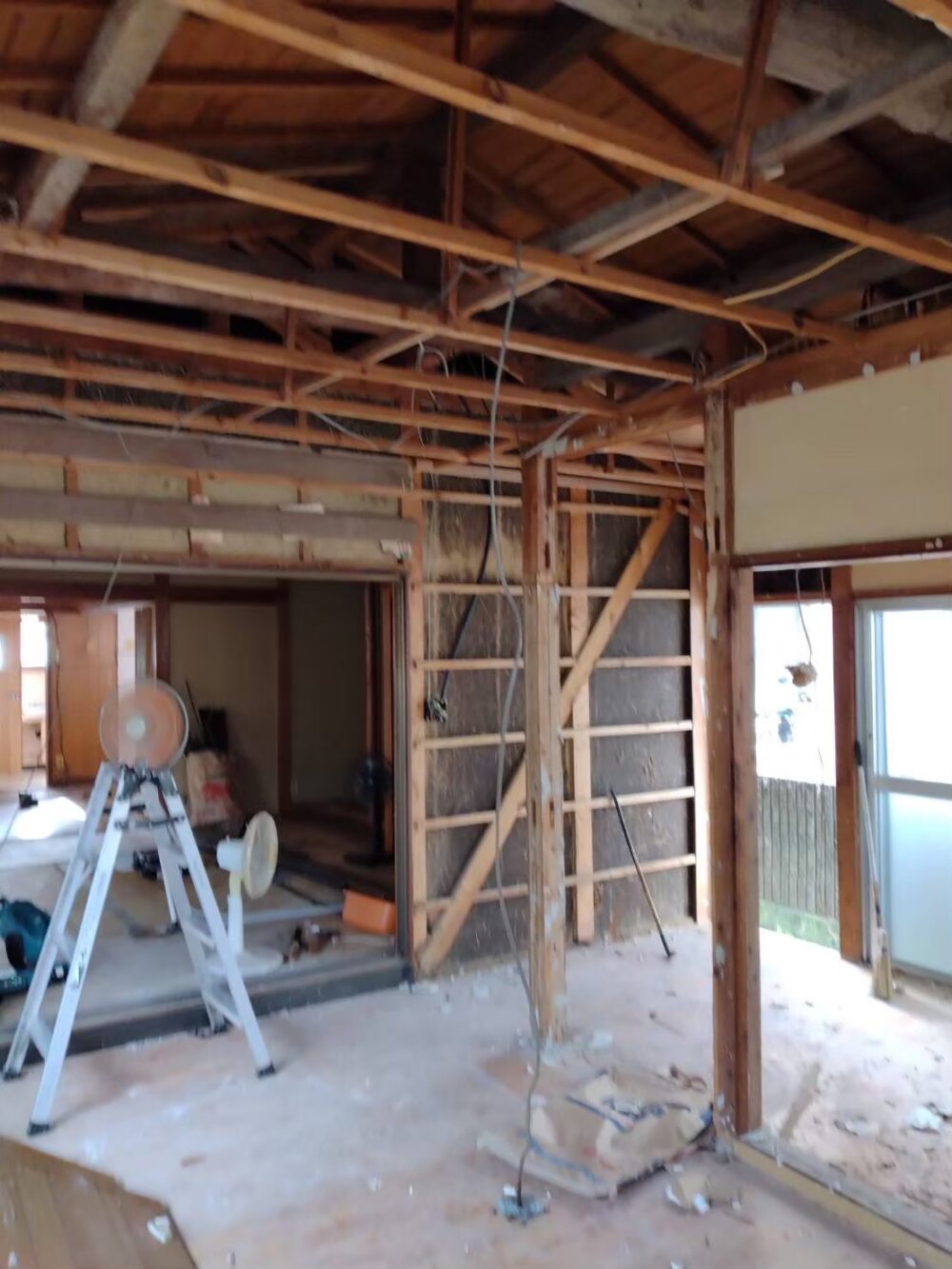
始まりました古民家改修プロジェクト、まづは何はともあれ解体です。
躯体は残して、とってもよい壁(構造的にとっても大丈夫な壁)、天井を落としていきます。
“Greetings from the Manager.
The traditional house renovation project is underway.
We’re starting with the essential first step: demolition.
While preserving the structural skeleton, we are removing the ceilings and non-load-bearing walls.”
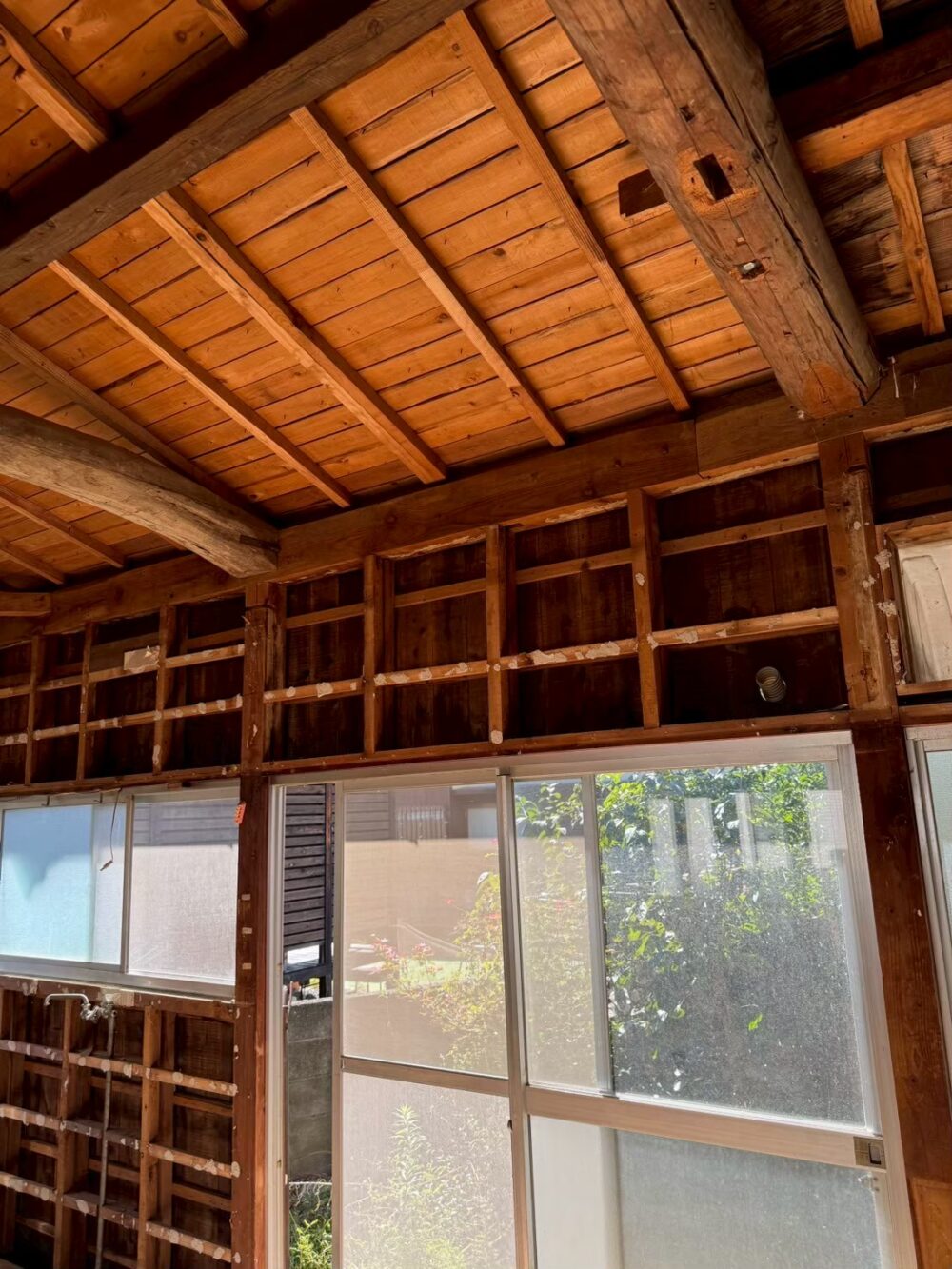
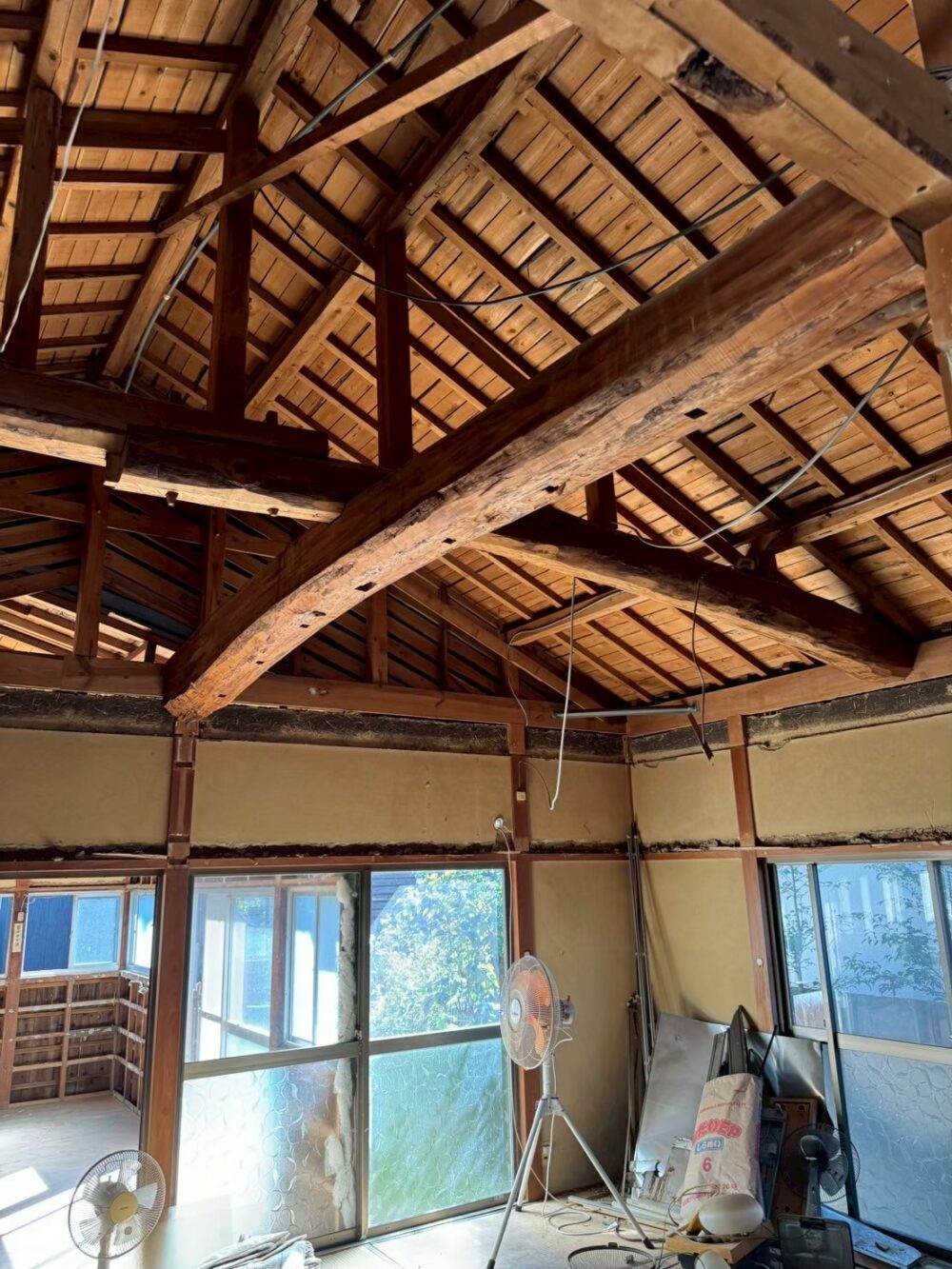
いい感じの梁ですね~。
建築よもやま話;Q-梁に使う木はなんでしょうか?
A-はい、そうです。松です。
松は曲がる(とくに雪国は雪が積もって松が曲がる)ので強度的に強いので、曲がった背を天に向けて使います。
“Take a look at these beautiful beams!”
Architecture Trivia:
Q – What kind of wood is used for these beams?
A – You guessed it: Pine (Matsu).
Pine trees naturally curve, especially in snowy regions where they bend under the weight of the snow.
This makes them incredibly strong.
When used as beams, they are positioned with the curved ‘back’ facing upward to maximize their structural strength.
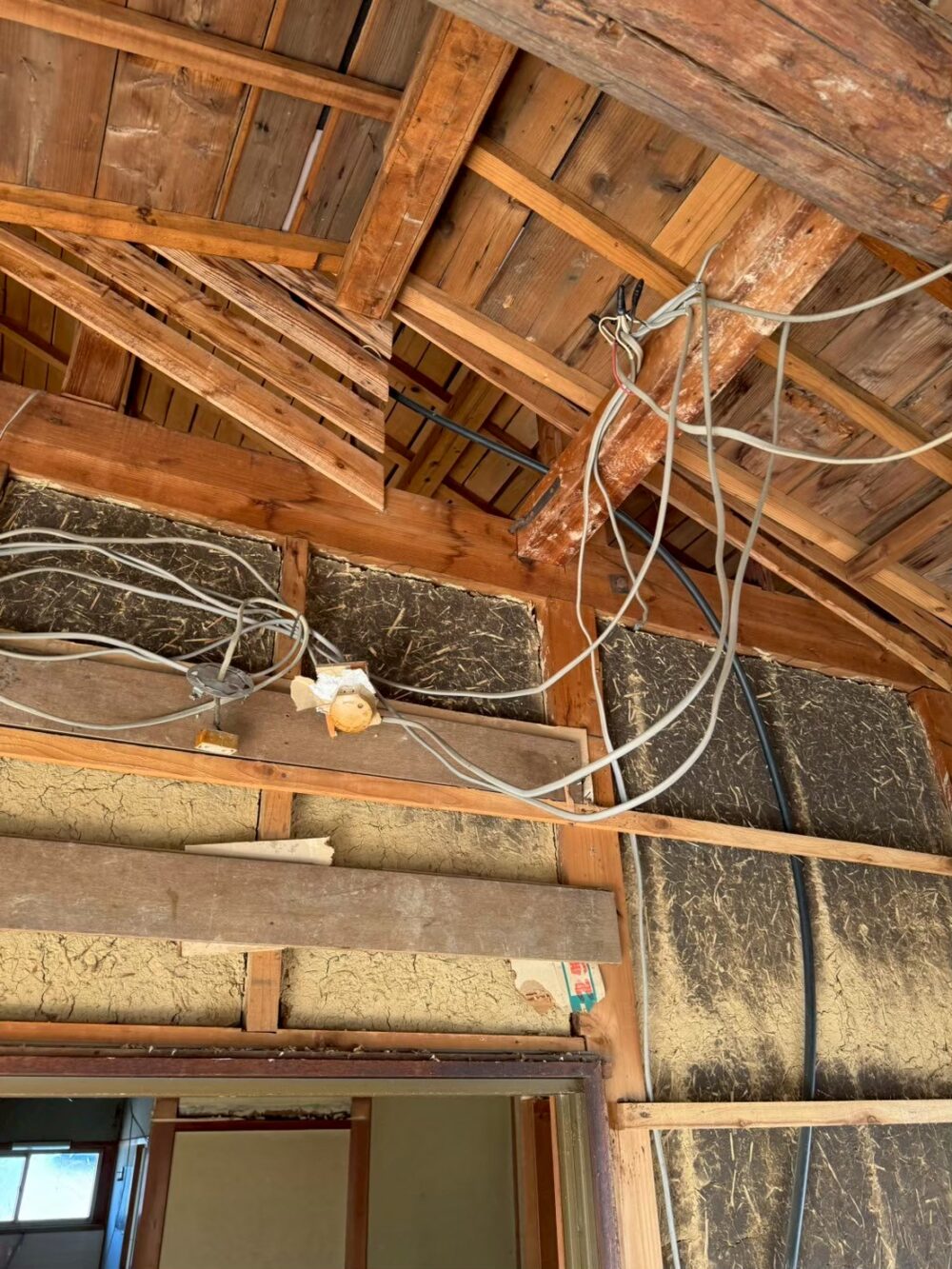
電気の線をまとめながら…
“Sorting through the electrical cables…”
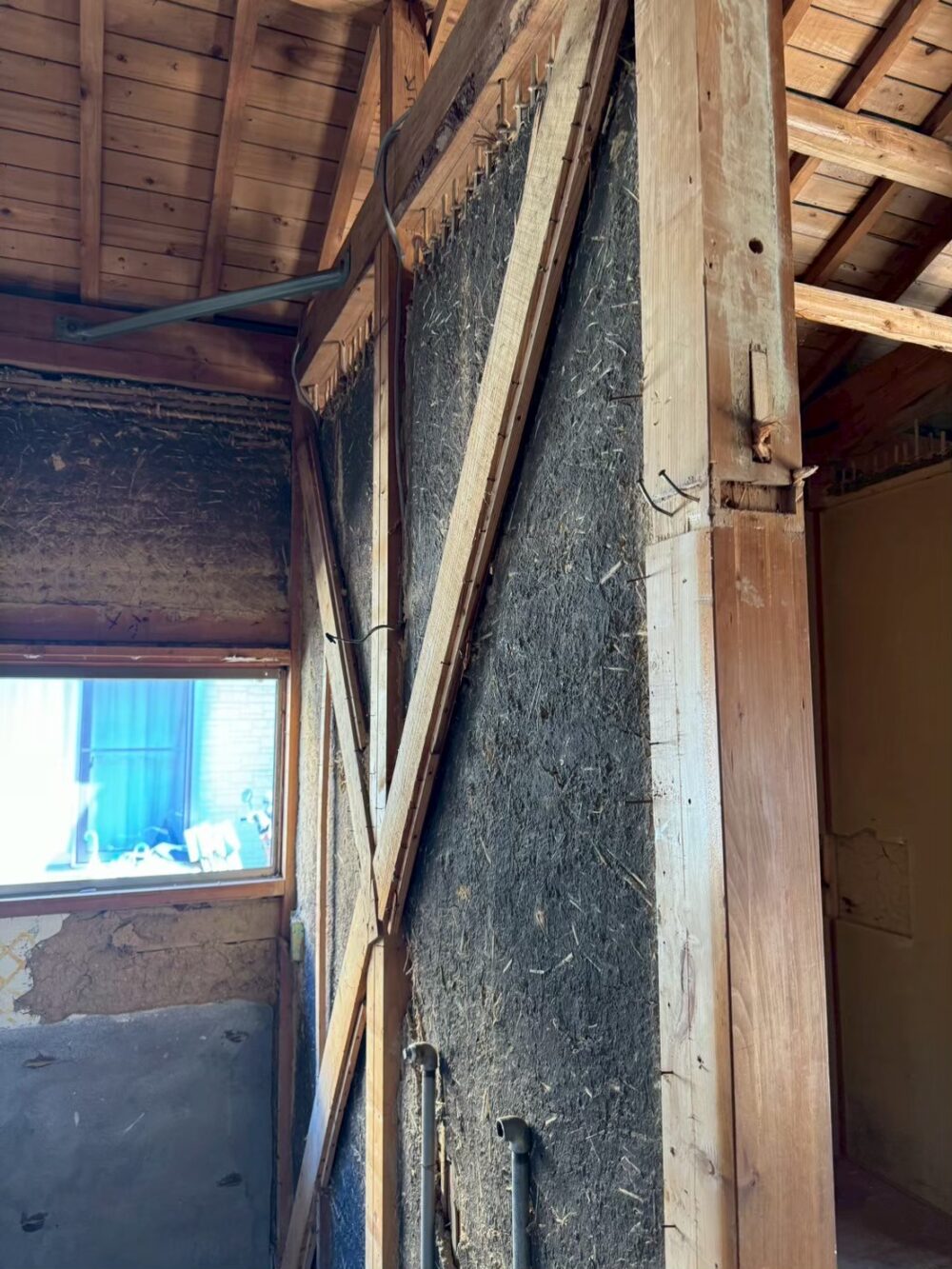
いい感じの筋交いも見えてきました。
“Some great-looking braces are starting to reveal themselves!”
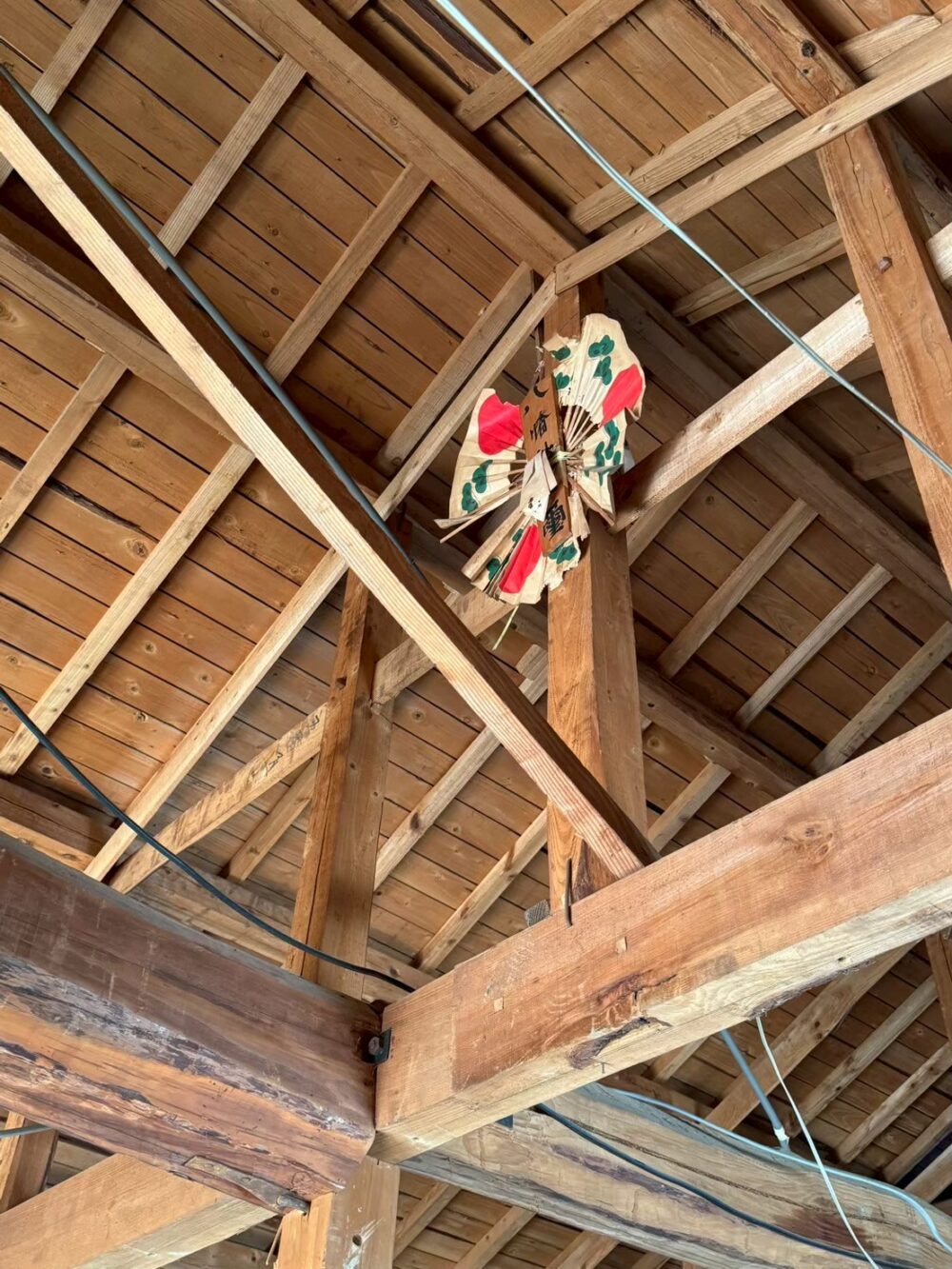
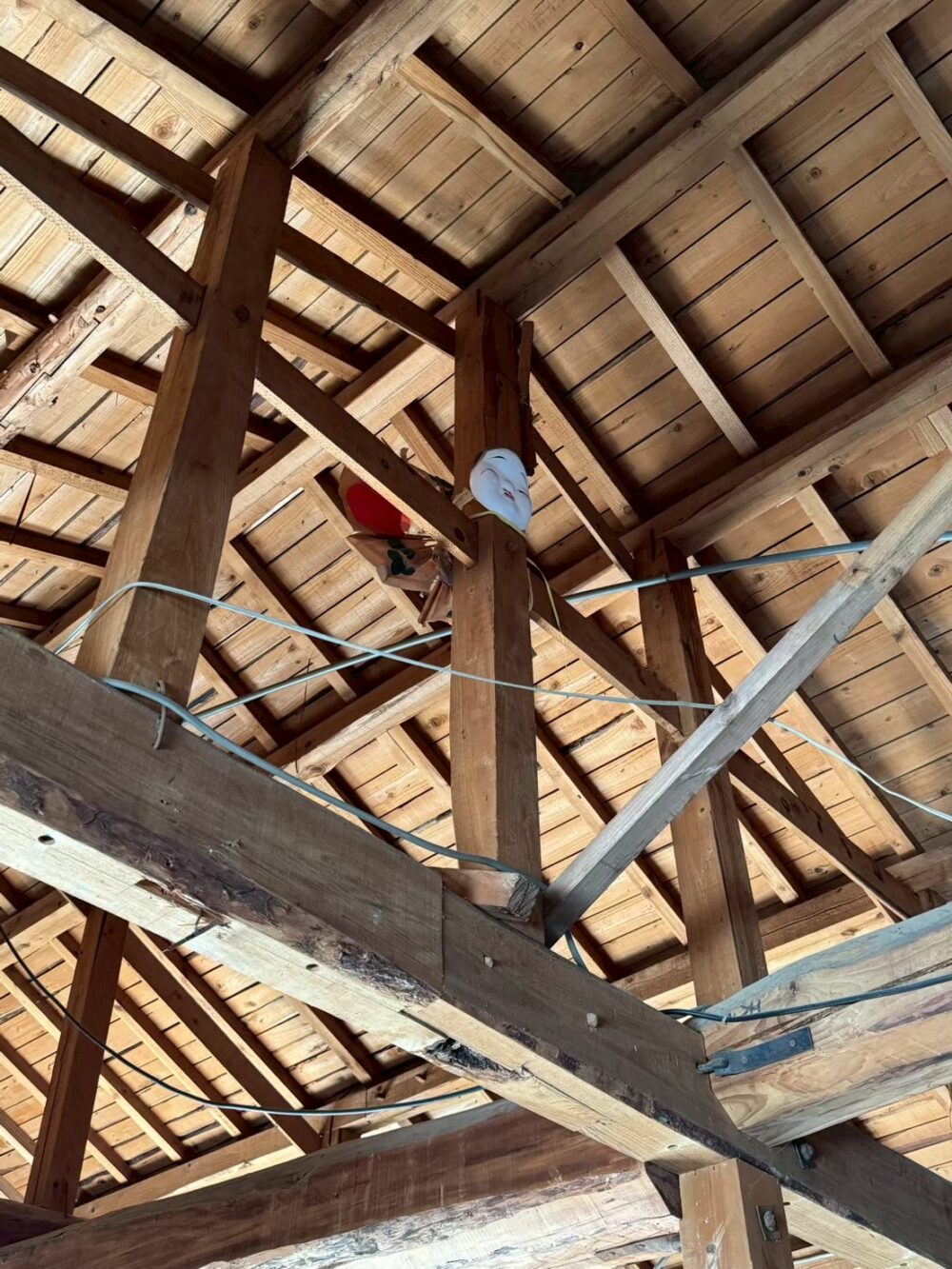
さて、天井を落とすと、こんな存在(いや神?、能面?おたふく?)が屋根裏にいました。
近所の神社さんのお守り(護符?)でしょうね。(棟上げ式で使った?)
昔は丁寧に平穏を祈り、神様を高いところに据えていたんでしょうね~。
最近はこんなことはあまりしないと思います。
丁寧なものづくりの時代が垣間みれる、貴重な経験ができました。
“As the ceiling came down, we discovered this presence watching over us from the attic—perhaps a deity, a Noh mask, or an Otafuku face? It’s likely an amulet (Gofu) from a local shrine, probably placed there during the original ridge-pole raising ceremony (Muneage-shiki).”
“In the old days, people must have prayed so sincerely for peace, enshrining a deity in the highest part of the house. You don’t see this kind of practice much anymore.”
“It was a precious experience that offered a glimpse into an era of truly mindful craftsmanship.”
次回もお楽しみにっ
さて、今回の音は
“Stay tuned for the next update!”
“And now, for the sounds of the day…”
COACHELLA見ました?
ではまた
“By the way, did you catch Coachella?”
“Catch you later!”